02 · Design & build
We will design and
build your vessel
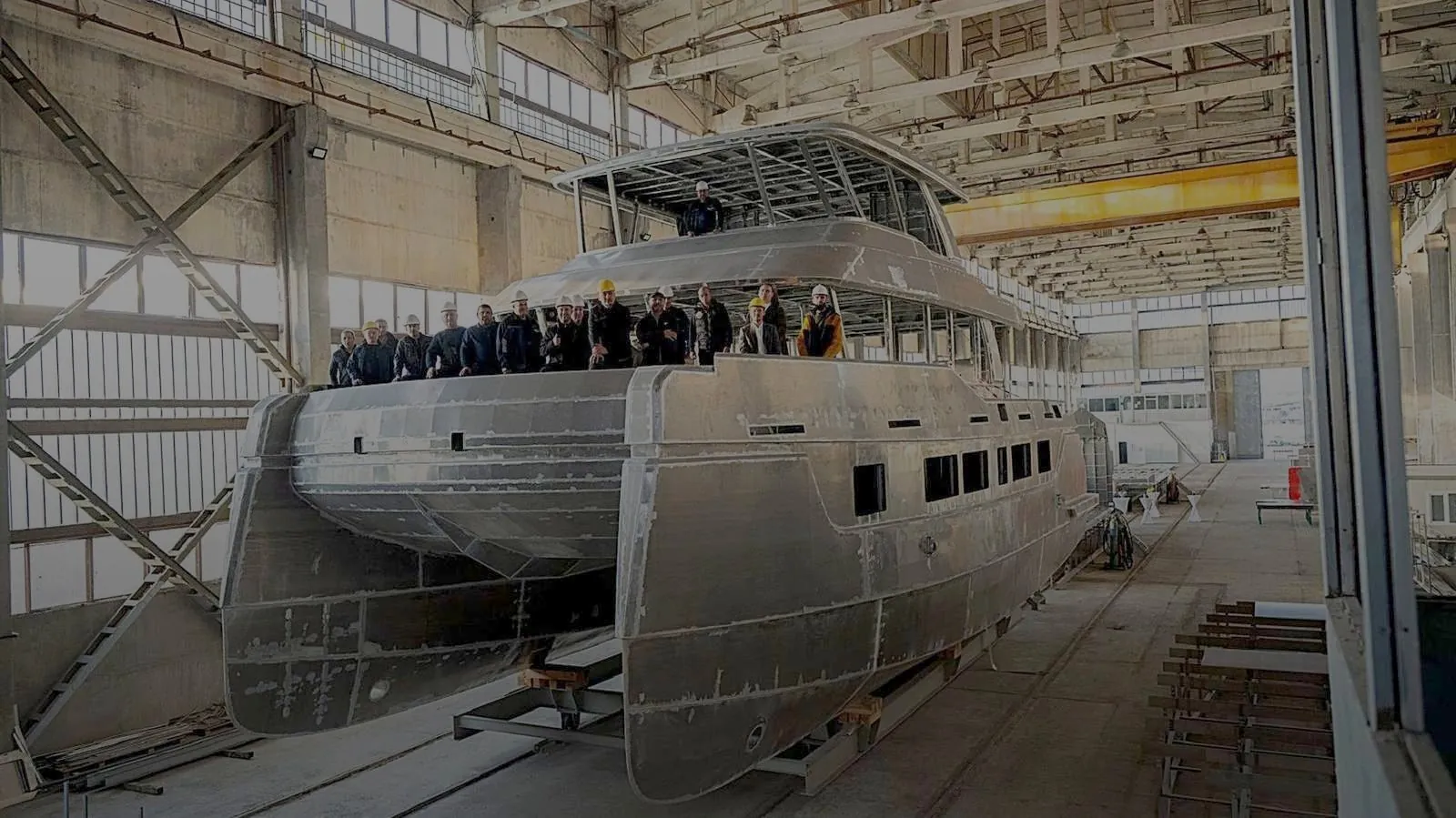
Stingray draws the project and builds the boat whole. Our own design office, our own halls, our own qualified welders, an audited quality system and an independent inspector who signs off every seam. One responsibility from the first sketch to handover — nobody standing between the drawing and the metal.
From the first sketch
to the launch
We can enter at any stage — from a blank sheet, or with a design you already own. The build standard does not change either way.
Brief and specification
Your task becomes a technical specification: type of vessel, area of operation, capacity, speed, budget. If a design already exists, we take it in and check it for producibility.
Design and engineering
Hull lines, general arrangement, calculations, interior and exterior design, working documentation — in three stages, each with its own delivered set.
Production engineering
CAD/CAM nesting, jig and fixture design, cutting files and a welding plan built around approved procedures.
Cutting and hull assembly
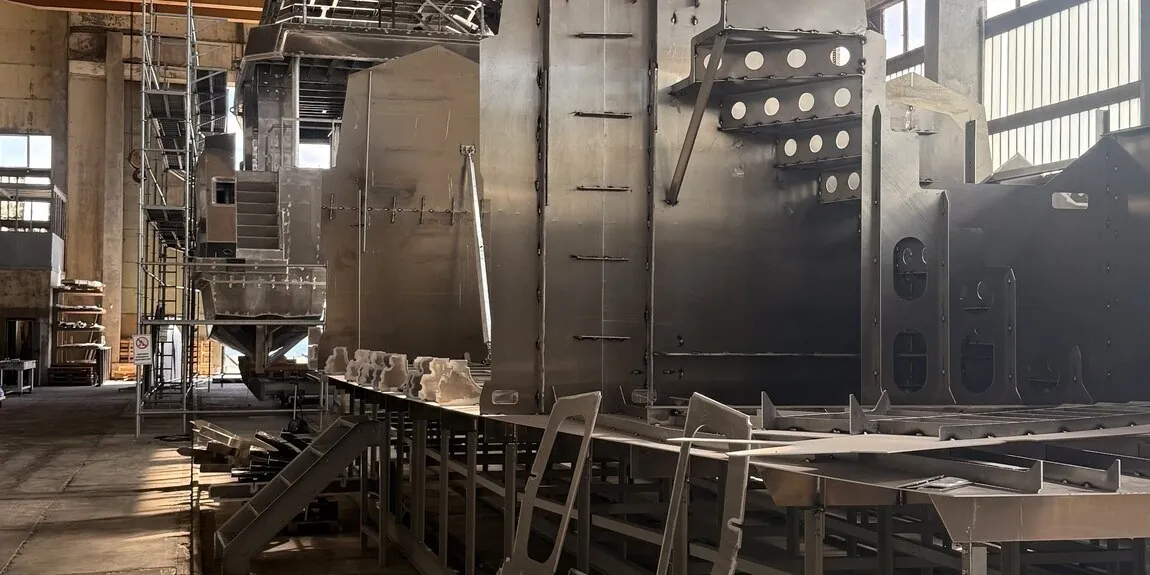
Plate and profile cut to the model; the structure welded on the jig by qualified hands, with a welding log kept seam by seam.
Outfitting
Systems, mechanical, interior and paint — or the hull closed out for completion at your own yard, if that suits you better.
Inspection and handover
Independent inspection, class and CE documentation, sea trials, then handover or export from an EU port with the complete file.
02 · The design office
What the office draws
before the yard builds
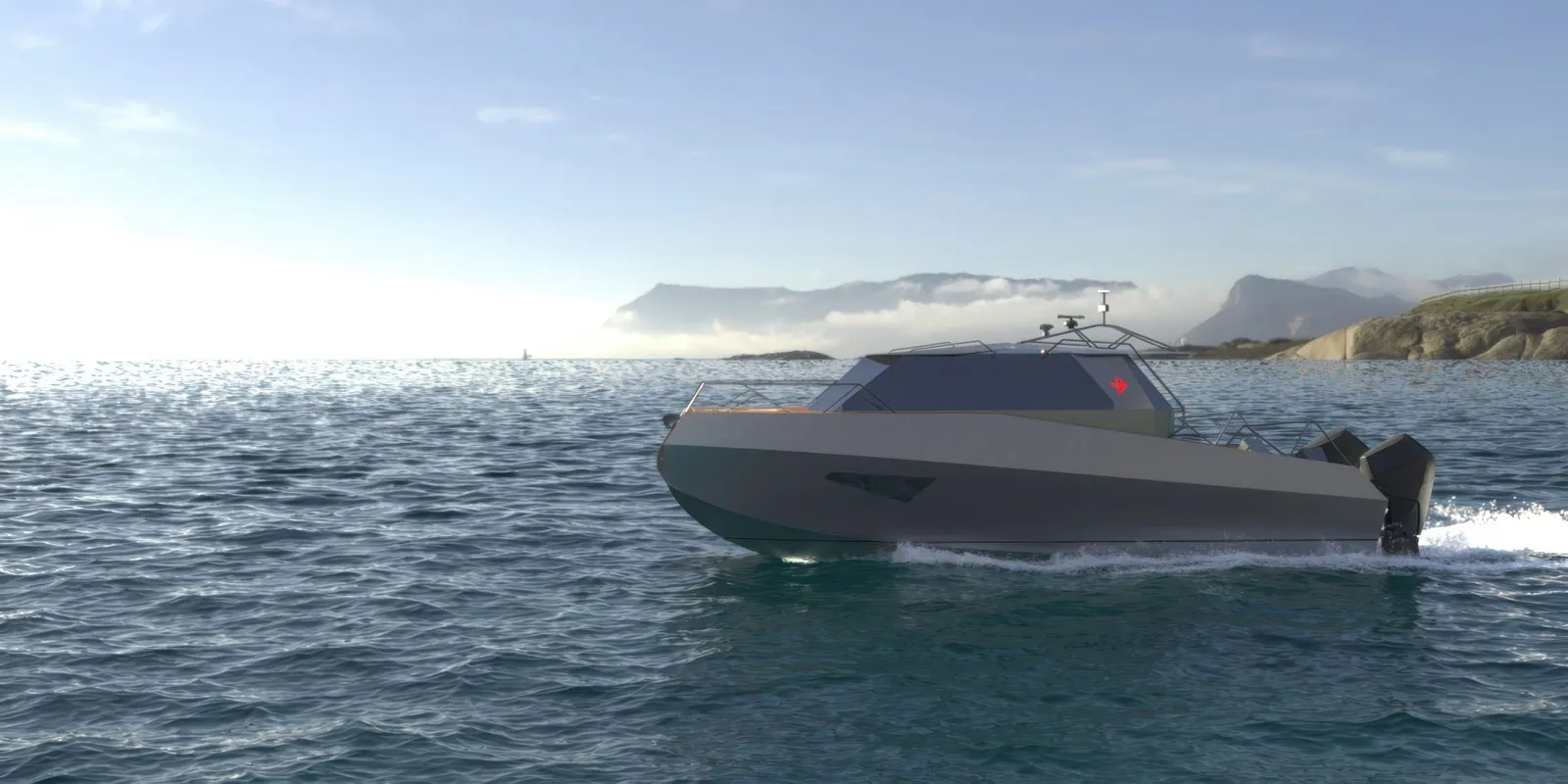
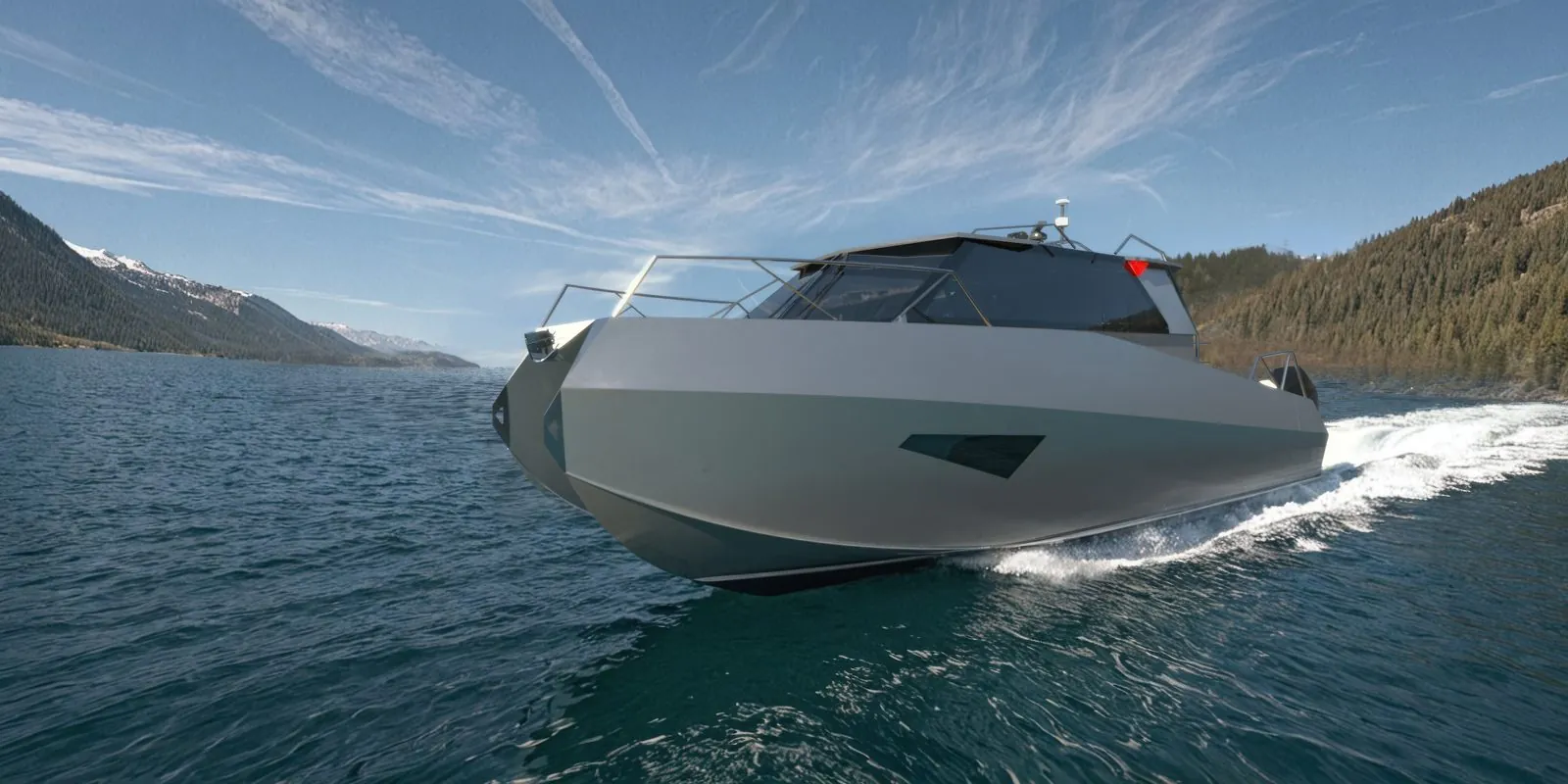
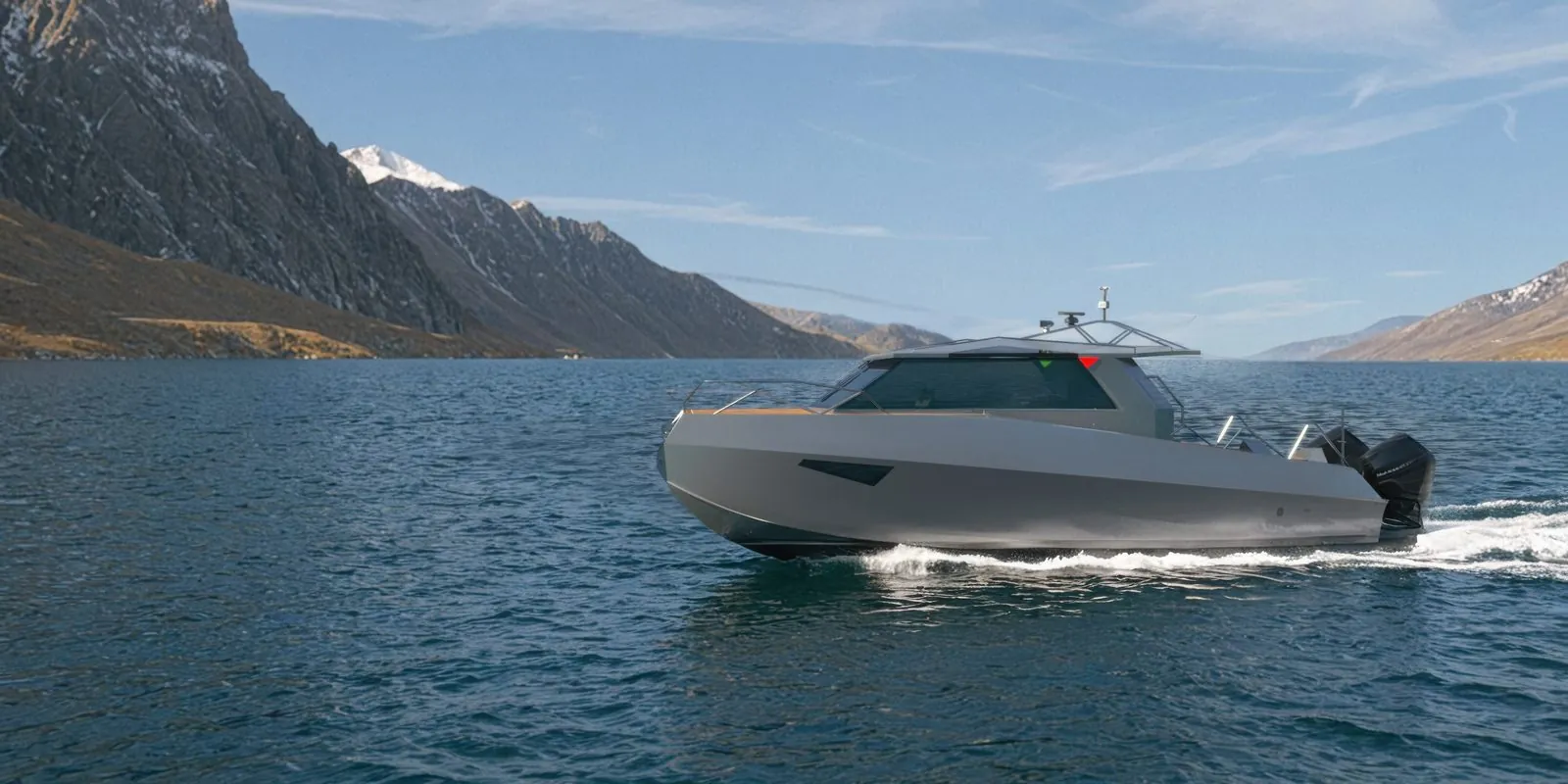
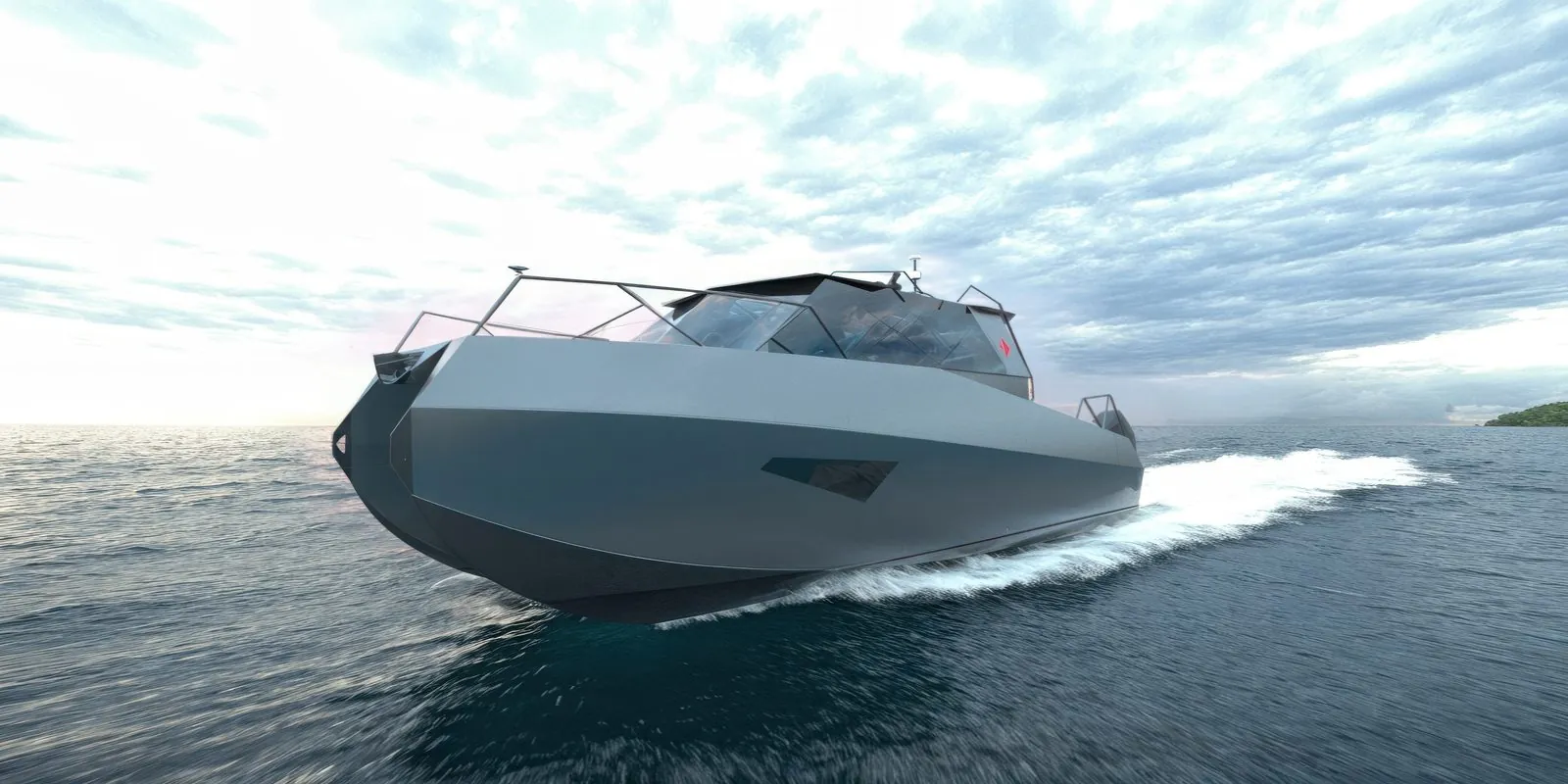
Exterior concepts from our own design office — the stage where a brief becomes a hull. Each of these started as a blank sheet.

GERRIS
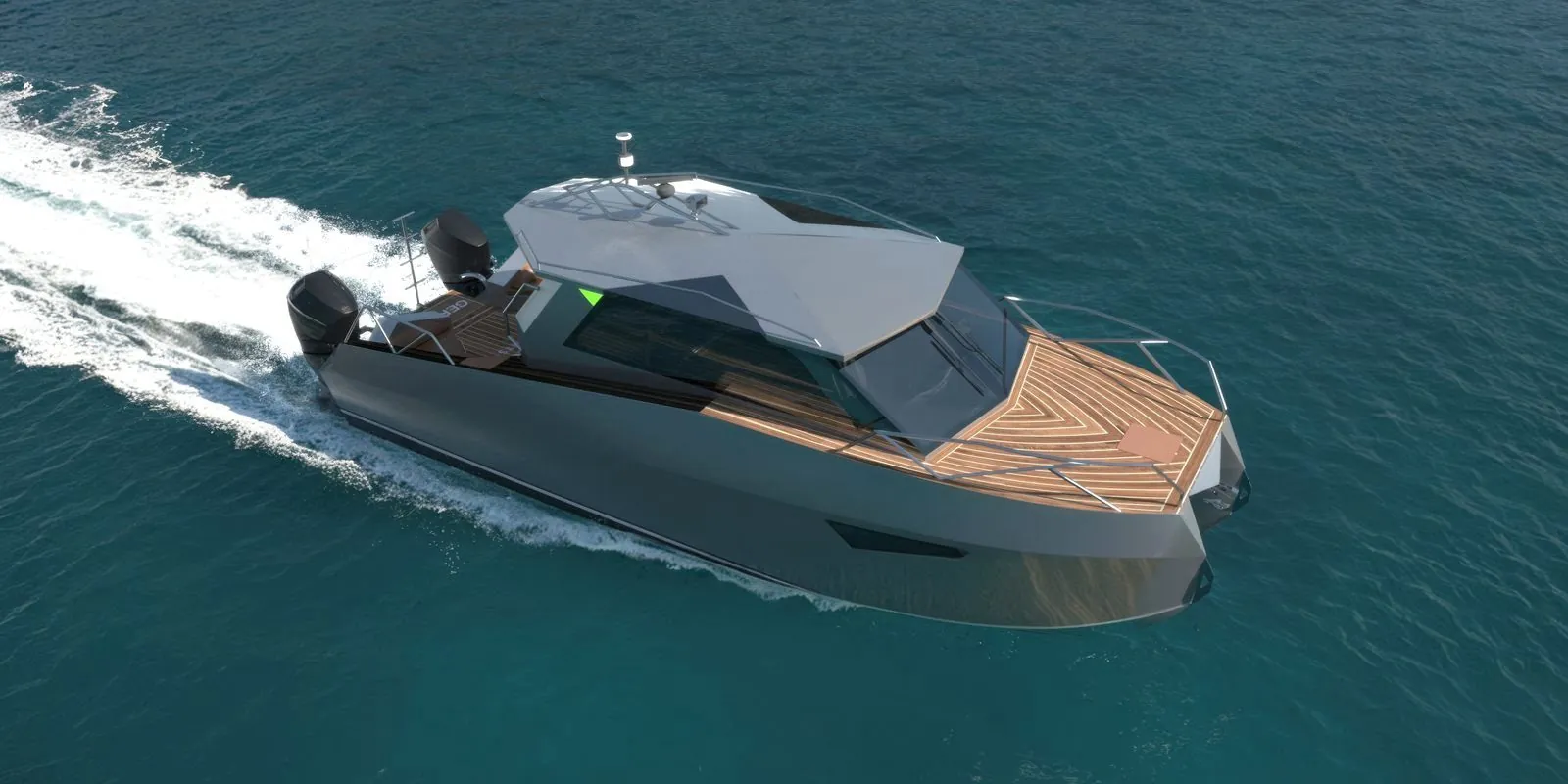
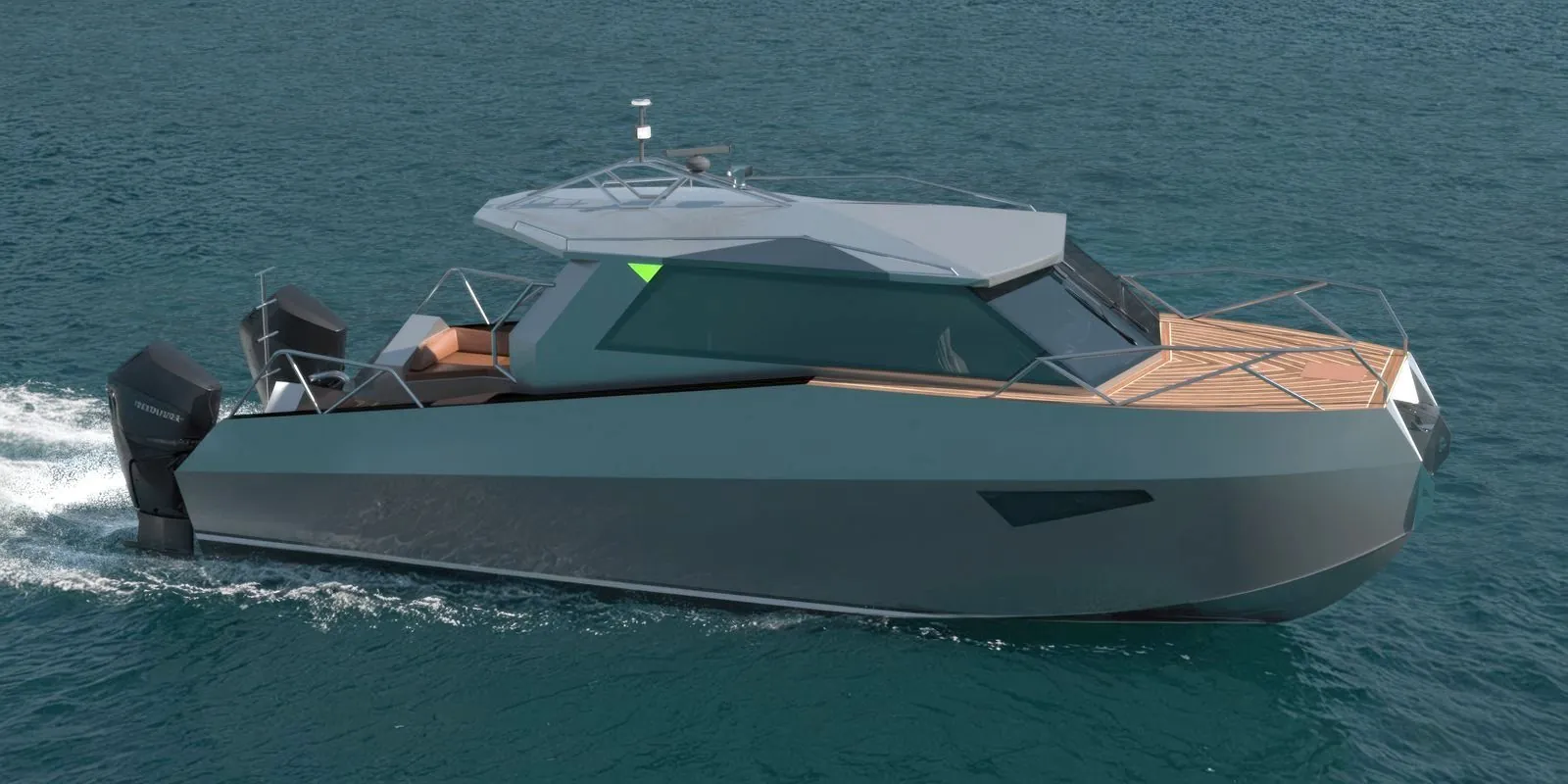
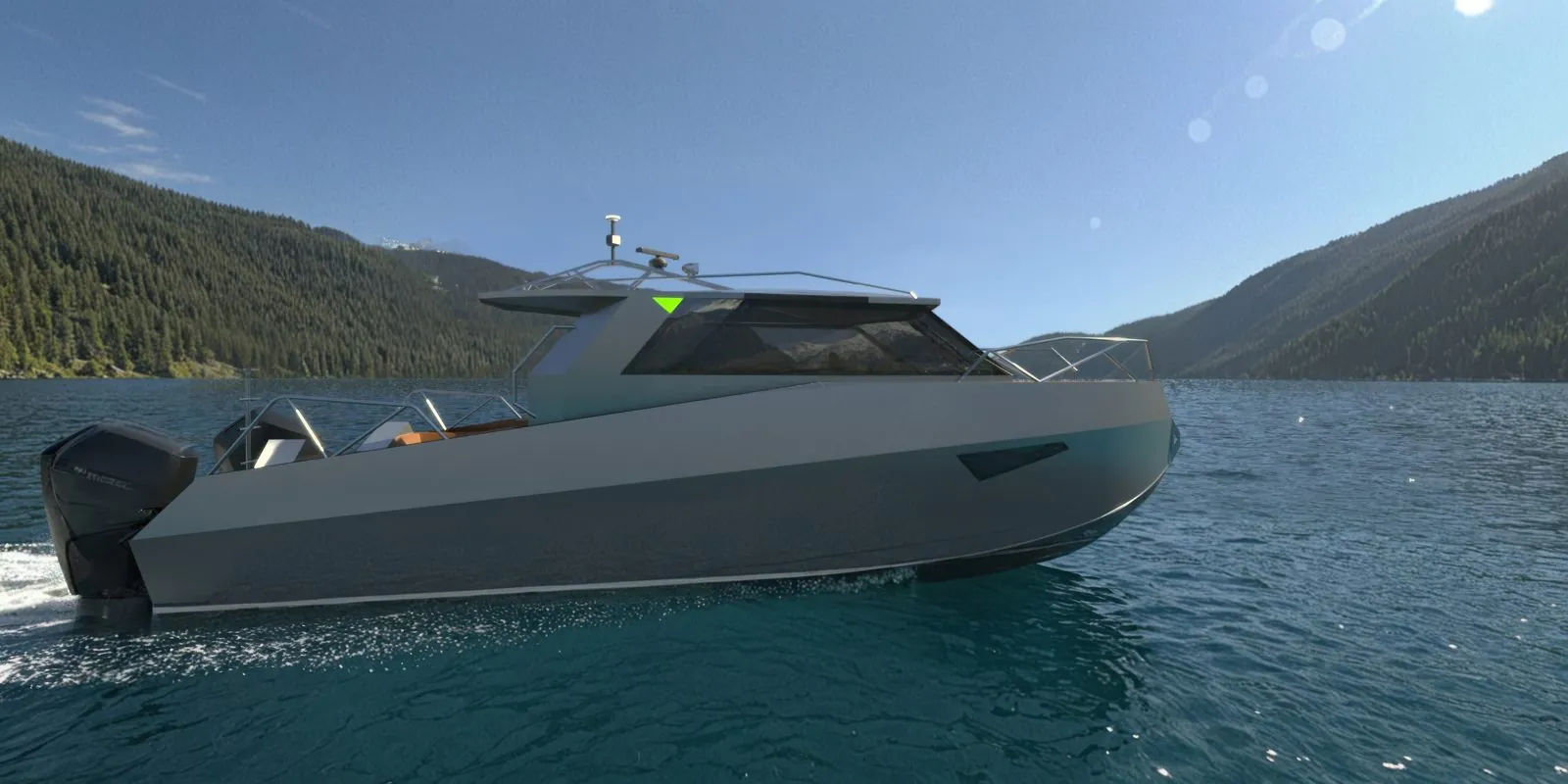
SWALLOW
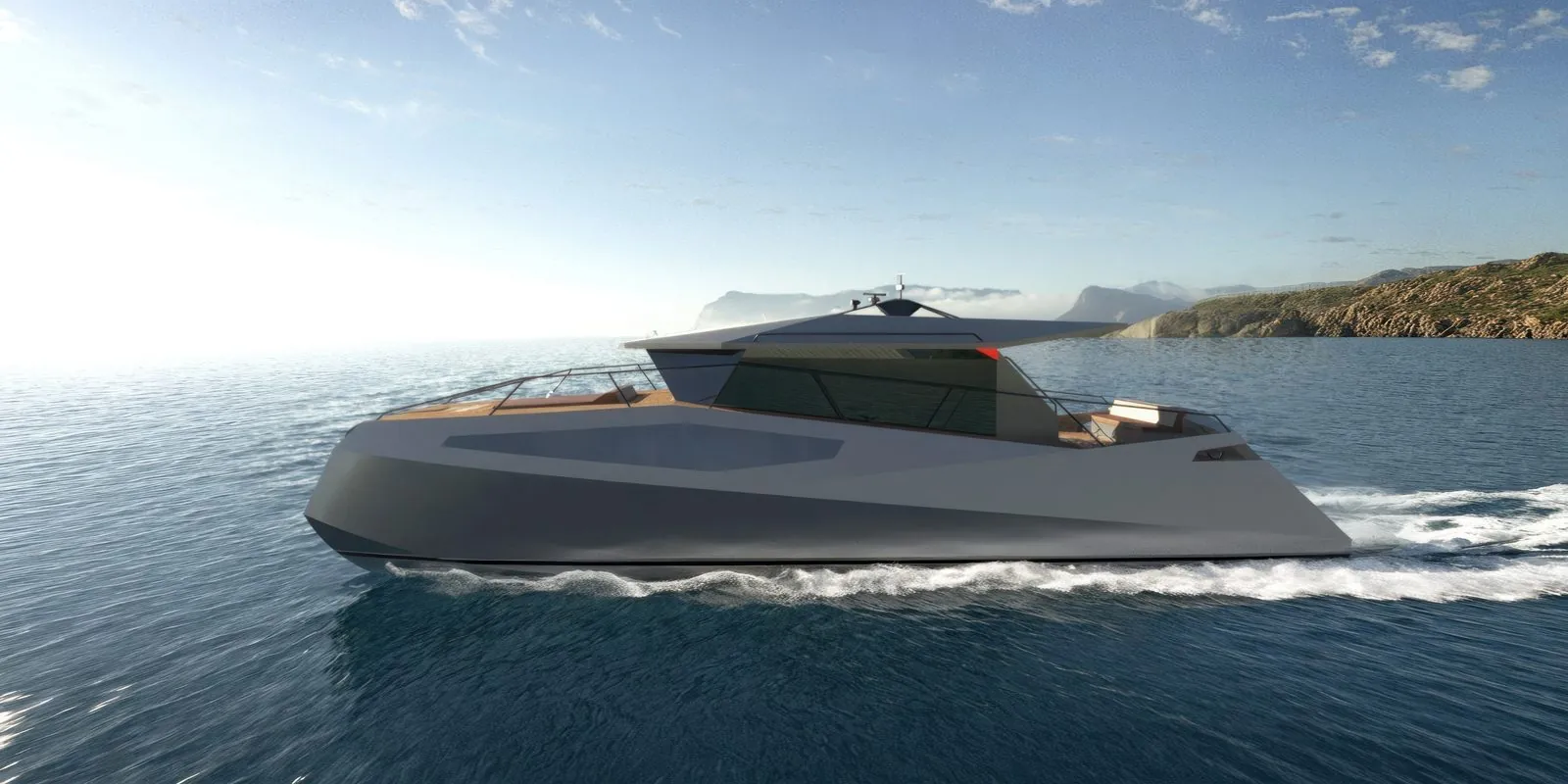
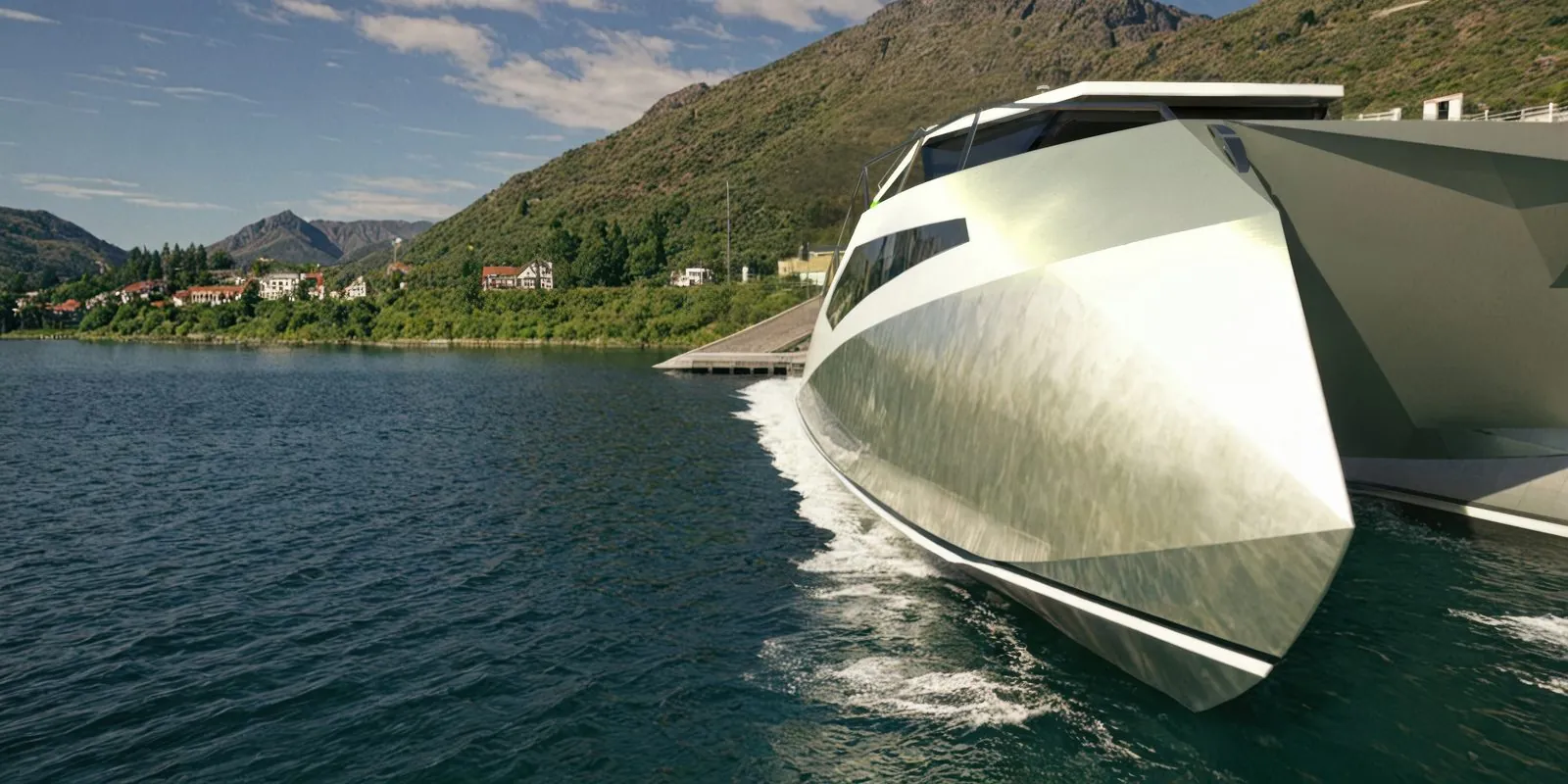
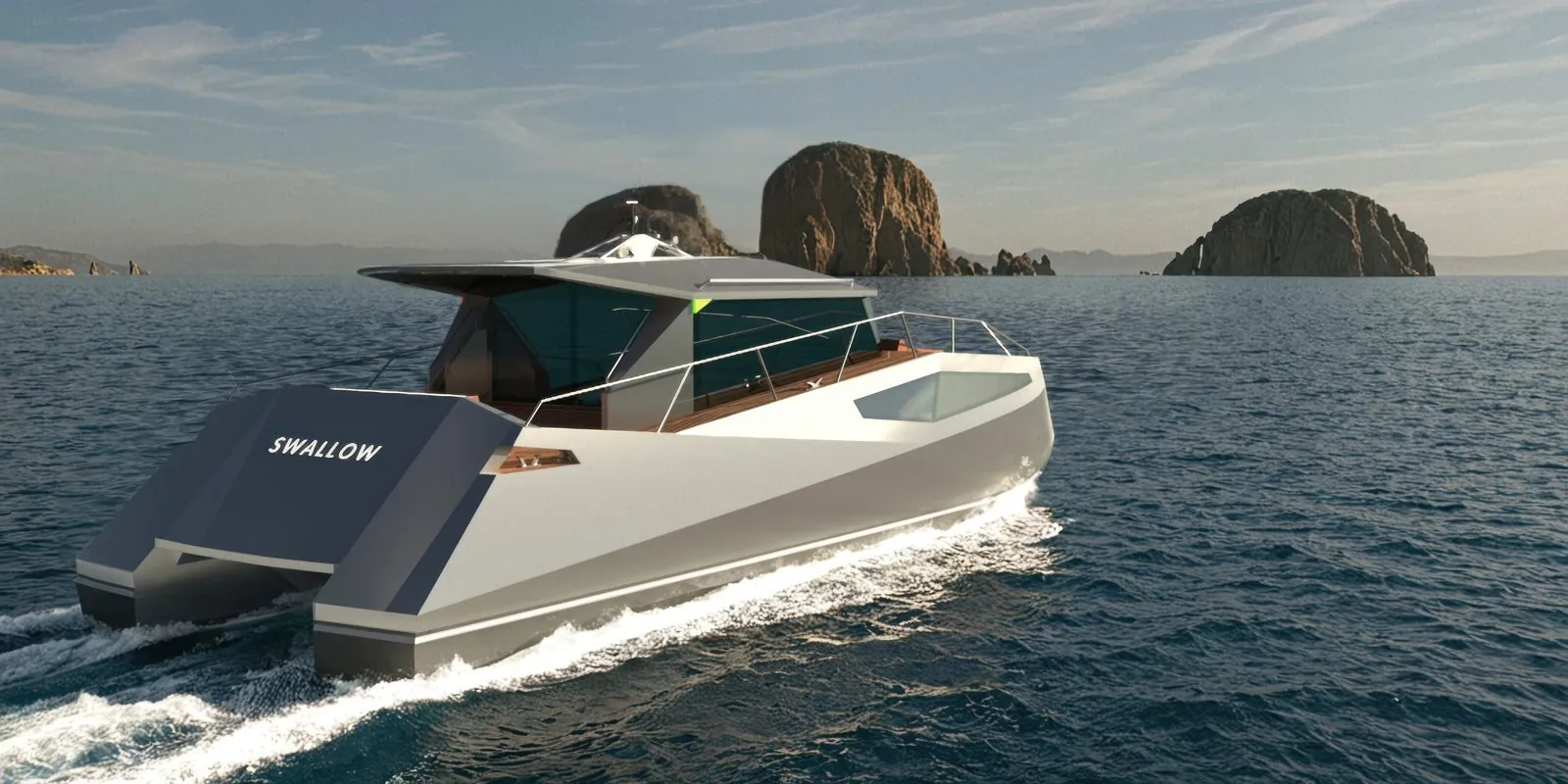
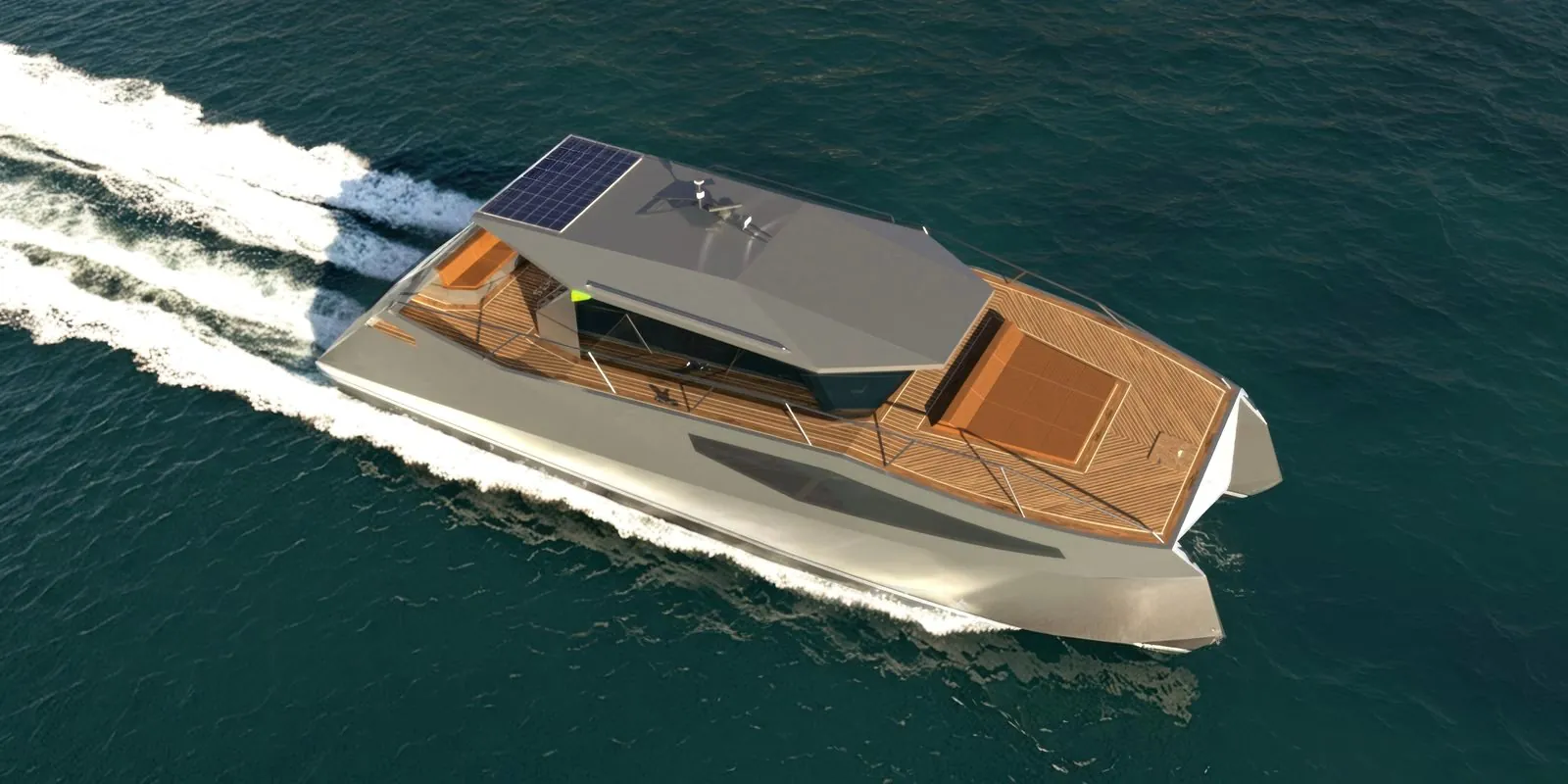
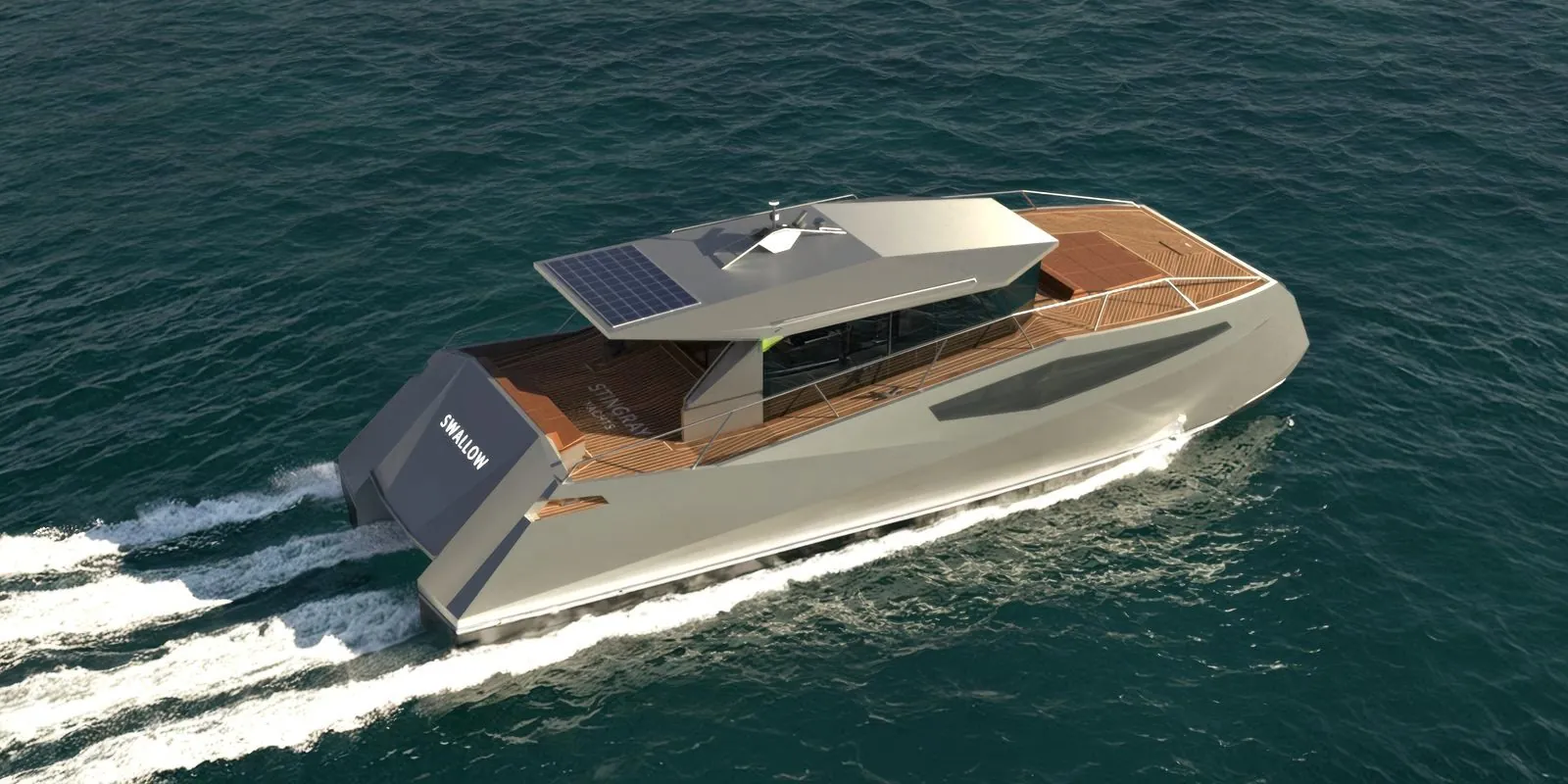
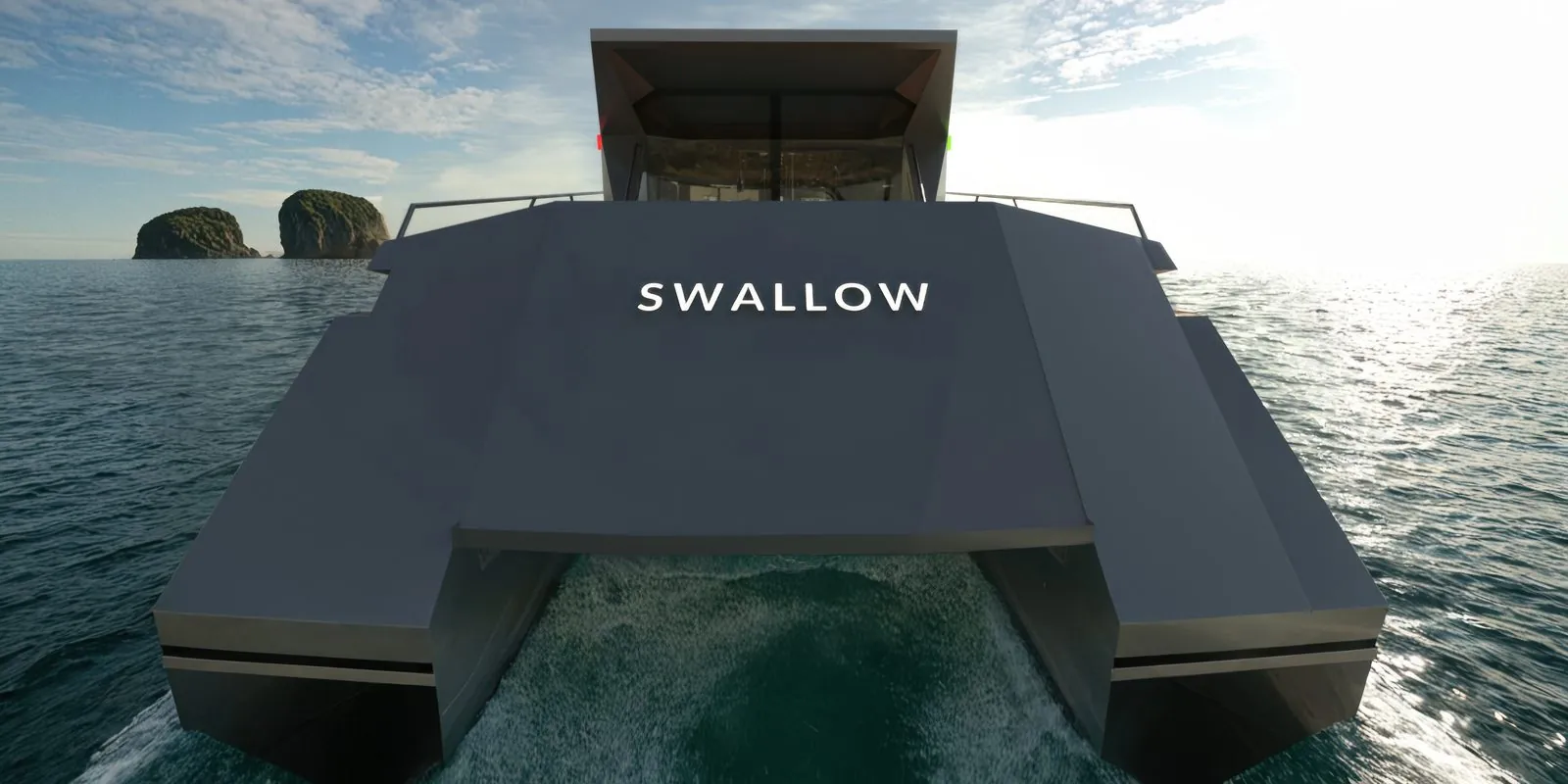
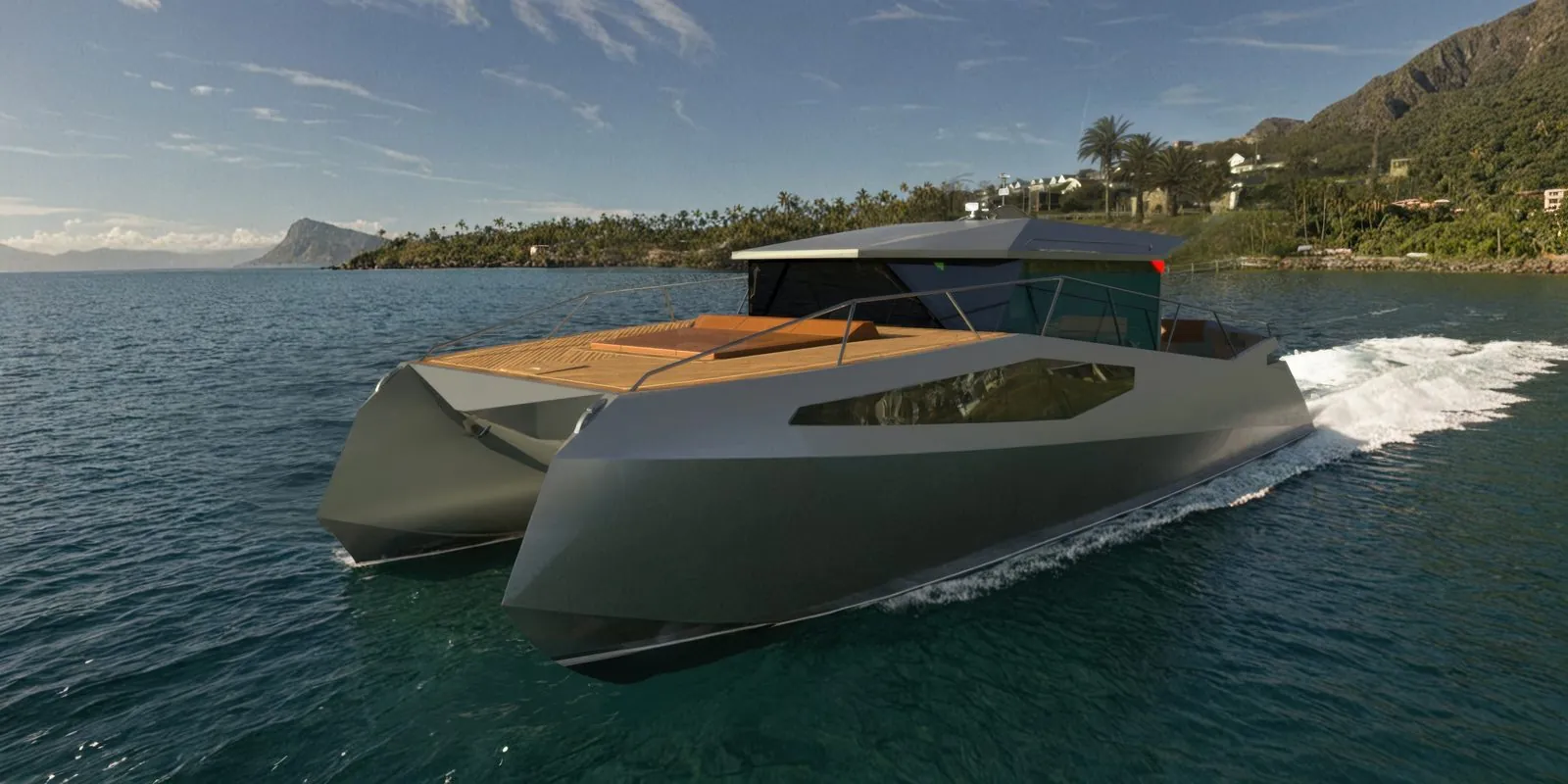
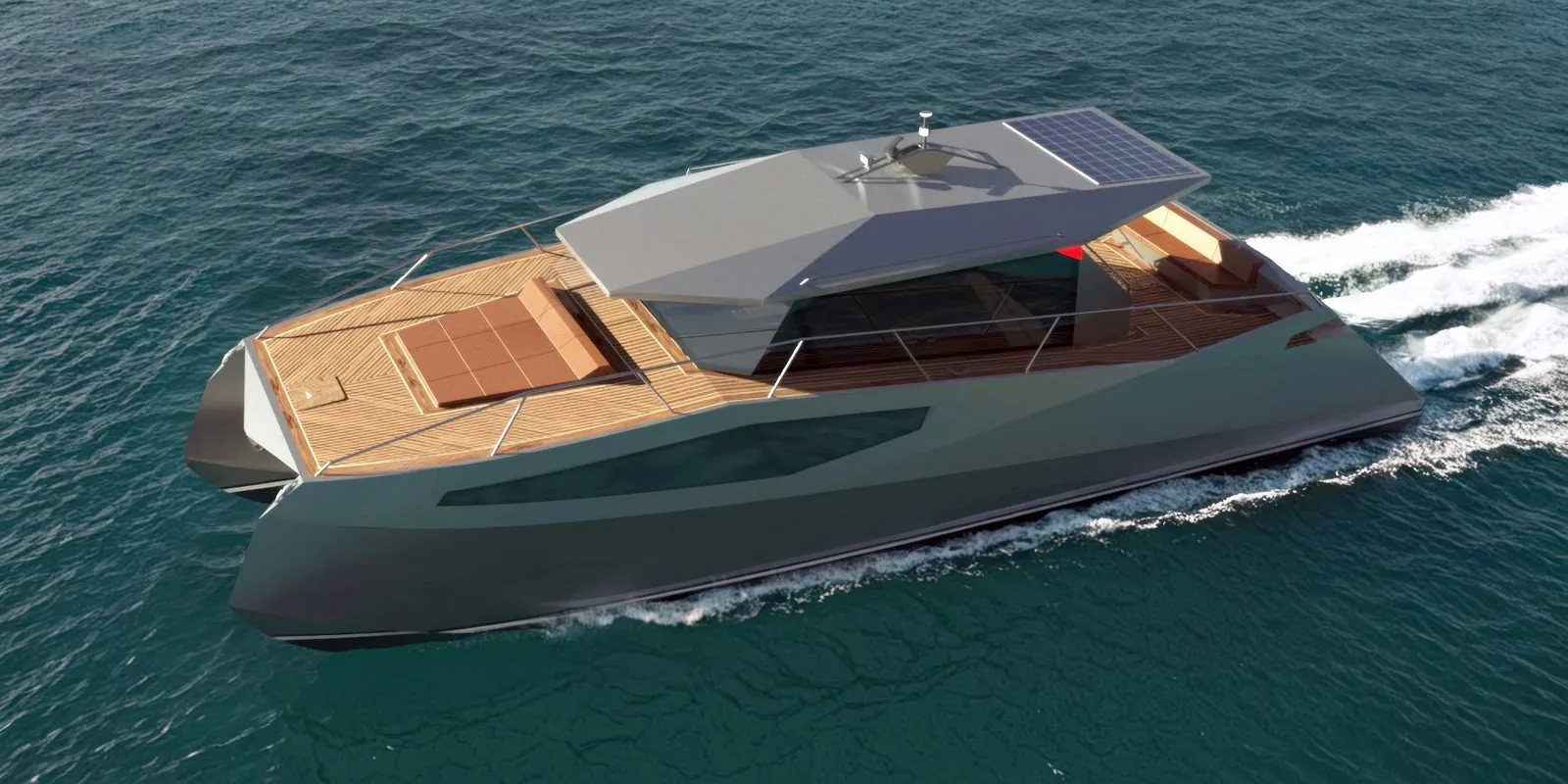
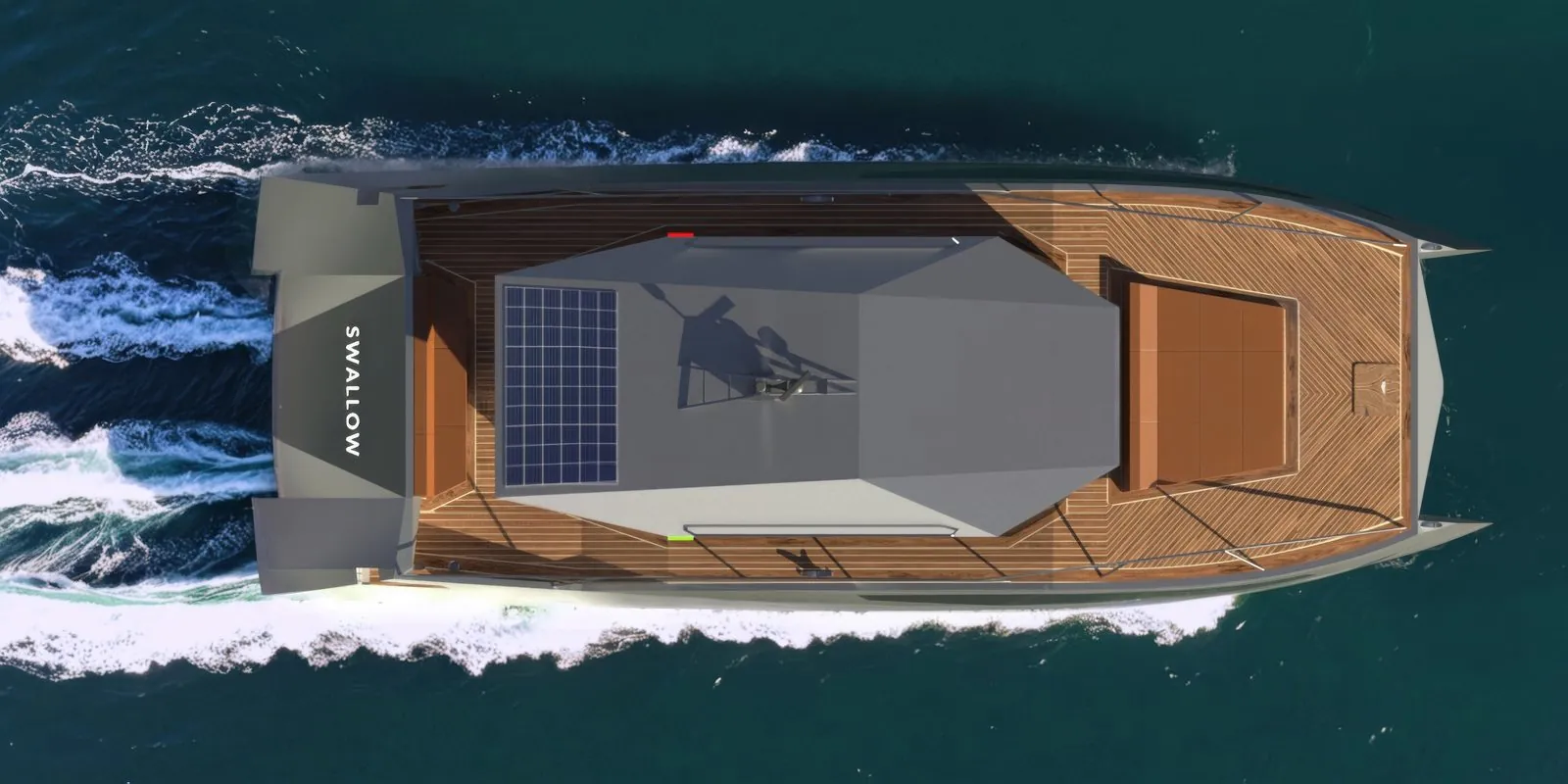
Design renders from current programmes. Interior packages and general arrangements are shared per project, under NDA where required.
Welding technology · Fronius CMT
What the arc
leaves behind
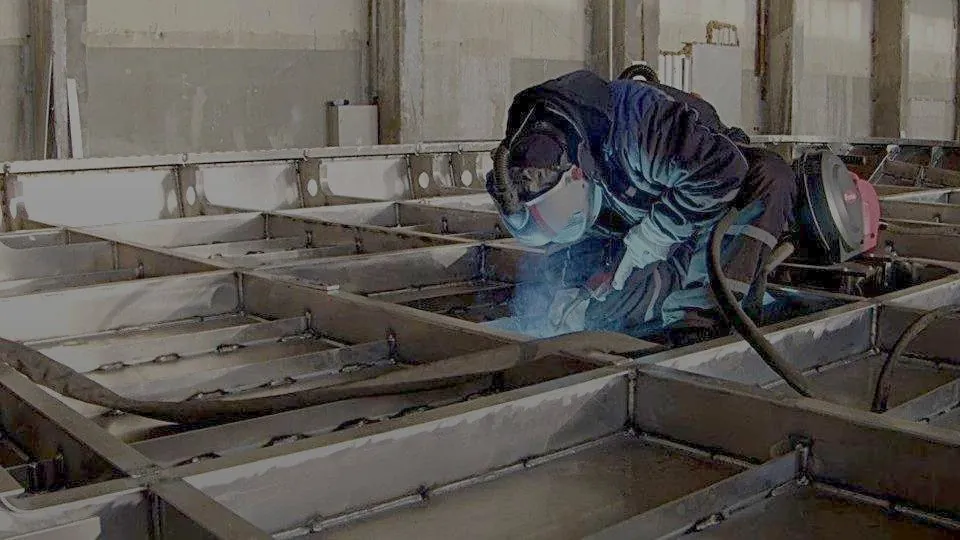
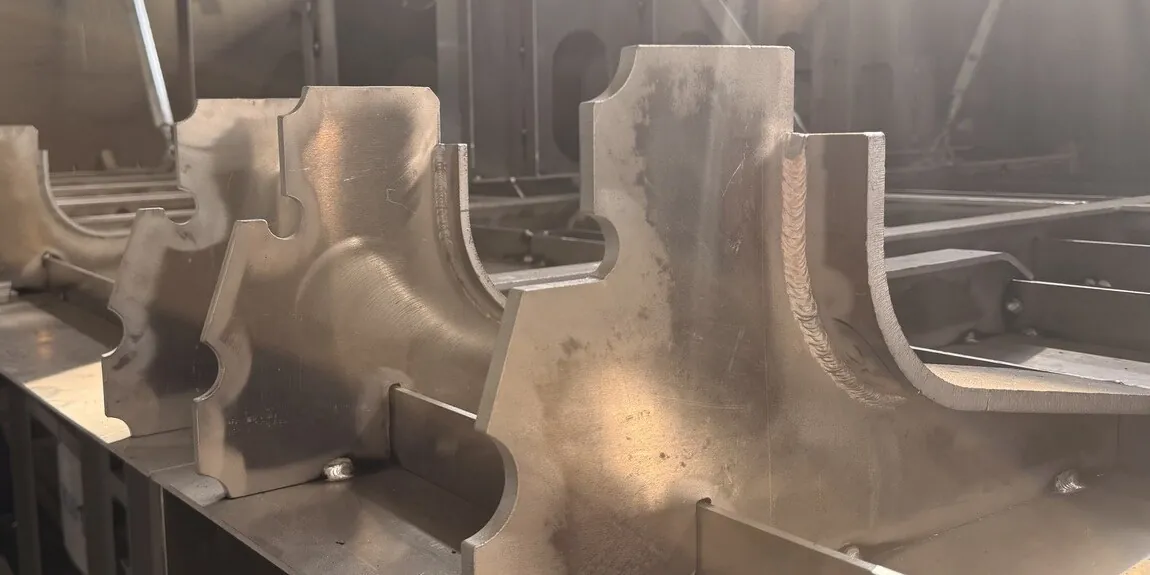
The whole welding park is built on Fronius equipment. On the hull skin — the plating itself — we weld with CMT, Cold Metal Transfer: a digitally controlled process that puts a fraction of the usual heat into the sheet, which is precisely what keeps distortion out of the aluminium shell. Structure behind the skin is welded conventionally, where heat input does no harm.
Why it is on this page at all: the difference is visible on the finished boat, in the flatness of the topsides and in what the paint is sitting on.
Conventional MIG on the skin
- High heat input
- The plating takes far more energy than it needs, and the shell moves as it cools.
- Distortion
- Topsides pull and wave; the hull comes off the jig needing to be made straight again.
- Spatter and rework
- Seams cleaned, ground and dressed by hand — hours per metre, never twice the same.
- Filler over the metal
- Fairing compound to recover a flat surface: added weight and a future failure point.
Fronius CMT on the skin
- A fraction of the heat
- Many times less energy into the plating, so distortion is reduced to near zero.
- Flat topsides
- The shell comes off the jig fair, so paint goes onto metal rather than onto filler.
- Clean, aesthetic seams
- Spatter-free welding with consistent bead geometry; a visible seam stays visible.
- Reproducible and recorded
- A digital arc runs to an approved procedure and feeds the traceability record.
Quality management
An audited system,
not a promise
How we plan, control and record a build is not a claim we make about ourselves — it is written down, followed and audited. The certificates behind the yard, and the legal entity each one is issued to, are named in full in the documentation pack rather than displayed as badges here.
Drawing control
Every revision controlled from the office to the shop floor — the shop never works from an old sheet.
Welding logs
Seam by seam: welder, procedure, material batch, date. Traceable years after delivery.
Incoming inspection
Material and equipment checked and recorded on arrival, against the certificate that came with it.
Non-conformity control
Defects quarantined, corrective action recorded and closed out. Internal audits on a fixed cycle.
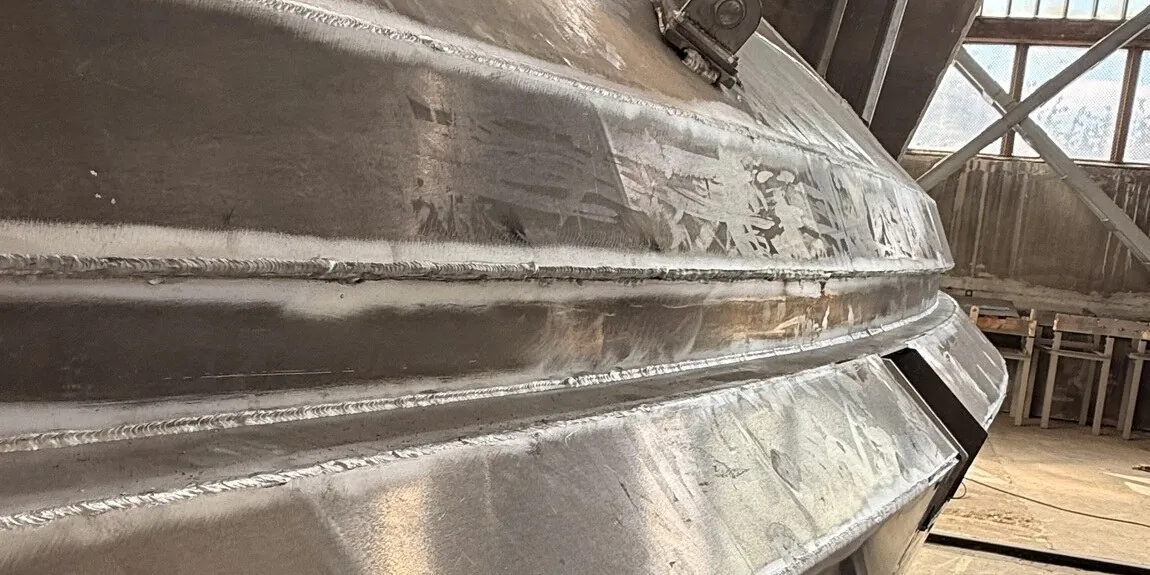
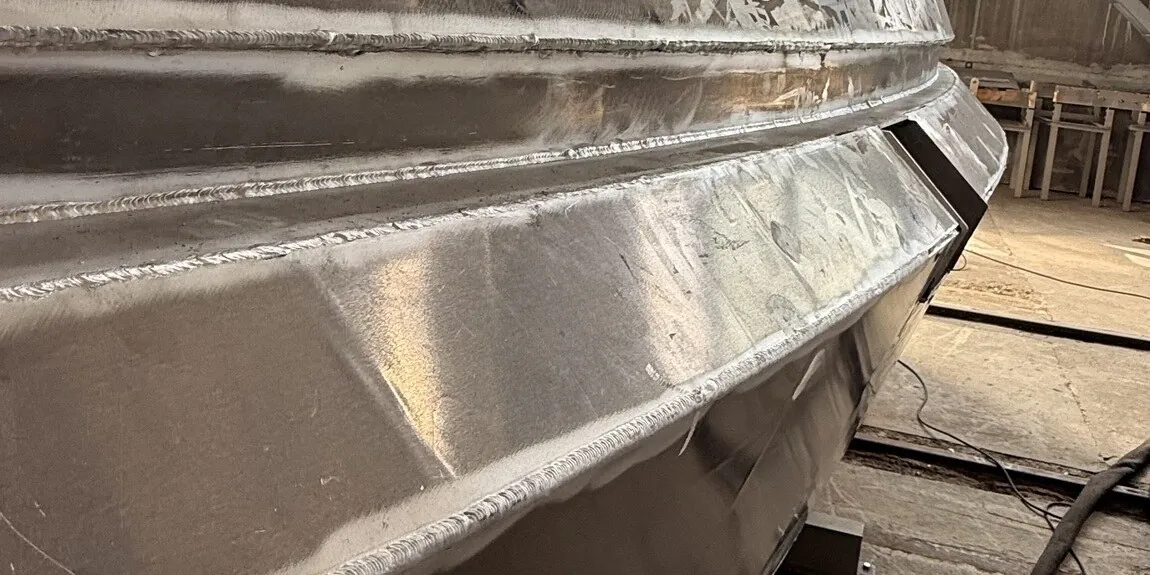
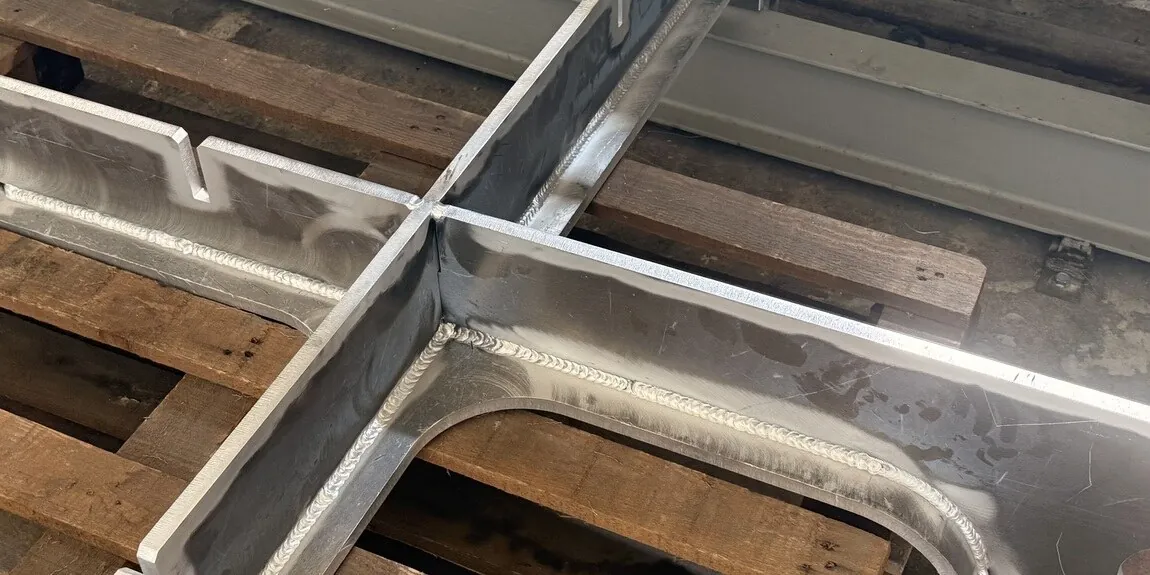
Weld quality
02.1 · Part of design & build — ORIGAMI
 Aluminium hull technology · proprietary method
A hull that is folded,
not patched together
ORIGAMI is our own method of building an aluminium hull. Instead of cutting the shell into many panels and welding them back into a shape, flat plate is cut and then bent along pre-calculated fold lines, so the geometry itself carries the form. What welding remains runs in straight lines and is done by friction stir welding. The shell comes off the jig fair enough to be coated or wrapped as it is.
The distortion is designed
out, not corrected later
A conventional aluminium shell is welded together from many pieces. Every seam puts heat into the plate, the plate moves as it cools, and what follows is straightening, grinding and a layer of fairing compound so the paint has something flat to sit on. That compound is weight the boat carries for the rest of its life, and a place where a defect can start.
ORIGAMI removes the cause instead of repairing the symptom. Panels are cut flat and bent along lines calculated in advance, which takes most of the seams out of the visible shell. The ones that remain are straight, and they are made by friction stir welding — a solid-state process that joins aluminium below its melting point, so there is no arc, no filler and very little heat going into a surface that has to stay fair. Conventional MIG and MAG welding is used only where the seam will never be seen.
Fronius CMT, described in section 02, is how we weld aluminium on a conventionally built hull. ORIGAMI is the step before that: a shell that needs far less welding in the first place.
Panel-built shell
- Many seams across the skin
- Each one is heat the plating has to absorb, in the place where it does most harm.
- Straightening after welding
- The hull is made fair again by hand — hours per metre, and never twice the same.
- Filler to recover the surface
- Fairing compound and multilayer coating: weight added permanently, and a future failure point.
- Rework on the critical path
- Time spent making the shell straight again is time the whole programme waits for.
ORIGAMI
- Bent, not butted
- Fold geometry carries the shape, so the shell needs a fraction of the seam length.
- Friction stir welding
- Aluminium joined below melting point on straight seams — no arc, no filler, minimal distortion.
- Coated as it comes
- Surface finish to Ra ≤ 3.2 µm — paint or wrap goes on directly, with no mechanical preparation.
- Ready after assembly
- Each hull comes off light, stiff and usable, rather than entering a straightening phase.
Against a comparable panel-built hull, on our own programmes.
Weight that would otherwise go into weld, straightening and filler.
Total seam length does not exceed a quarter of the developed length of the hull plating.
Hydrofoil-supported catamaran geometry: more speed, lower fuel burn, stability in all conditions.
These figures are our own production measurements against conventional panel construction on comparable hulls. They are not third-party verified, and we will show how each one was arrived at rather than ask you to take it on trust.
02.2 · Part of design & build — SEPIA
A hull with nothing
below its keel
SEPIA is our own hull form for ocean-going catamarans, drawn around electric pod drives from the first line. The propellers never reach below the hull, there are no shafts, brackets or rudders in the water, and both drives turn through a full circle under one joystick. We offer the SEPIA hull form to other builders and catamaran projects.
Built around its drives,
not fitted with them
Most catamarans carry their propellers on shafts, brackets and rudders that hang below the hull. Every one of those parts adds drag, has to be aligned and maintained, and is the first thing to meet the bottom in shallow water.
SEPIA starts from the other end. The two slender hulls are drawn around electric pod drives, so the underwater body stays clean and the drives stay inside the hull line. Every line is faired by hand and checked in a flow simulation of the complete catamaran before it is fixed.
Shafts and rudders
- Gear below the hull
- Shafts, brackets and rudders in the water: drag at every speed, and the lowest point of the boat.
- A bow thruster for berthing
- One more system to buy, power and maintain.
- Alignment and bearings
- Shaft lines, stern tubes and rudder stocks to look after at every haul-out.
SEPIA
- Nothing below the keel
- The propellers never reach below the hull line. In shallow water the hull meets the bottom first.
- 360° steering, one joystick
- The boat moves sideways and turns in its own length, with no thruster.
- 9–10 % less power
- Than the same hull on shafts, calculated at 12, 14 and 16 knots.
On one 15,000-litre fill, with one generator running.
Than a monohull of the same length and weight at 14 knots; half at 16.
Calculated with the wind on the beam, at the design displacement.
SEPIA is being designed for ocean passages.
Figures come from a flow simulation of the complete catamaran and from the design calculations, in calm water at the design displacement of 83 t; range is in service condition from a full tank. Final figures depend on the completed design and equipment.
Built and drawn this way
Where the method
has already been used
Fast power catamaran
Aluminium, sharp entry, sterndrives. Economical under way, clean in its wake and light on the helm — the case where a fair, light shell is the whole point.
Efficient catamaran platform
Built around shallow draft, large usable deck area and low operating cost. Taking weight out of the structure changes what the boat can do, not just what it weighs.
Trailerable power catamaran, 6.3 m
The smallest hull drawn for the method: a flush-deck walk-around catamaran on a 2.44 m road-legal beam, folded from 4 mm and 3 mm plate. In design; hull no. 1 confirms the figures.
The approach carries across every configuration we are asked for — military and patrol, commercial workboats, charter and private leisure. Lines, photographs and delivery references are supplied with the build documentation.
ORIGAMI is our proprietary method. It covers the combination that makes it work: bending along calculated fold lines, friction stir welding confined to straight single-bend seams, the elimination of fairing, and the CAD/CAM pipeline that minimises weld length. The method documentation is protected, the process window and the production know-how are held as a trade secret — disclosed under a mutual non-disclosure agreement, and they stay yours alone once brought into your project.
Ask for the technical briefing →Get in touch
Let's build
A technical survey of the site and a legal review of the concession. We arrange both and open the data room under NDA.
Send the brief, or the design you already own. You get a producibility check and a quote per stage, on an open book.
Send the 3D model, class drawings and specification. You get a producibility report and a scope you set yourself.
Or simply write to sales@stingray-yachts.com. Your details go only to the Stingray team — see the privacy policy.
Correspondence runs through sales@stingray-yachts.com. Hours, material invoices and subcontract orders on a build are visible to you online as they happen.